3 min read
Shopify vs custom eCommerce: which is right for your business?
Shopify supplies a managed commerce platform and extension model; custom commerce offers broader architectural control with greater ownership. The decision depends on catalogue, checkout, integration and operational requirements.
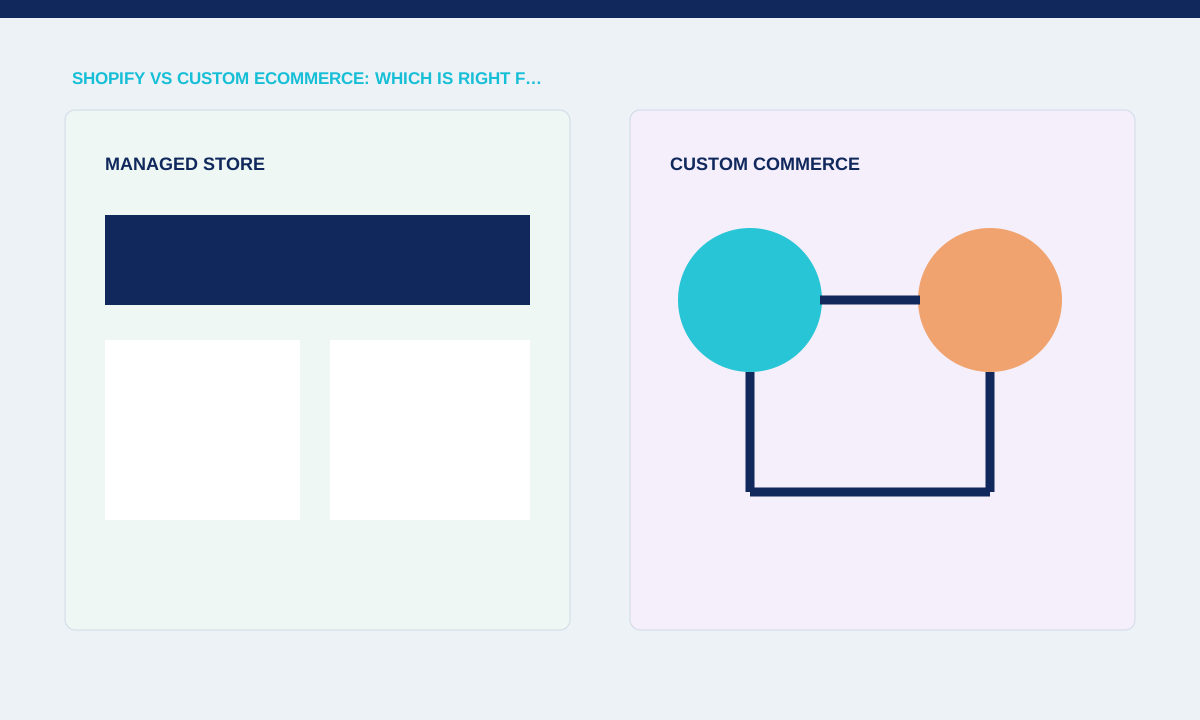
Map standard and unusual requirements
Products, variants, discounts, markets and fulfilment rules reveal whether standard platform behaviour is a close fit. A conventional retail catalogue may benefit from a managed platform, while unusual configuration or transaction logic may need custom work.
Document required states and confirm what the chosen plan, theme and extension APIs support.
Shopify provides managed commerce foundations, an administration area and an ecosystem of themes and applications. It is often suitable when the catalogue, checkout and operations fit supported patterns. Confirm required payment methods, markets, product rules and extension limits against current official documentation and the intended plan. Do not assume that an attractive theme proves a necessary checkout or back-office workflow is available.
Treat checkout as a constrained system
Checkout changes can depend on platform extension points and plan availability. A mock-up should not promise arbitrary layout or logic that the live checkout cannot implement.
Verify each checkout requirement in current official documentation before quoting or approving design.
Custom commerce is justified when the buying or operational model cannot be represented safely within a managed platform. Examples may include unusual configuration, account-specific pricing or deep workflow integration. The business then owns more architecture, testing, security and maintenance responsibility. Describe the unique requirement precisely; custom development should solve a confirmed constraint, not recreate standard catalogue and order features without a business reason.
Include integrations and operations
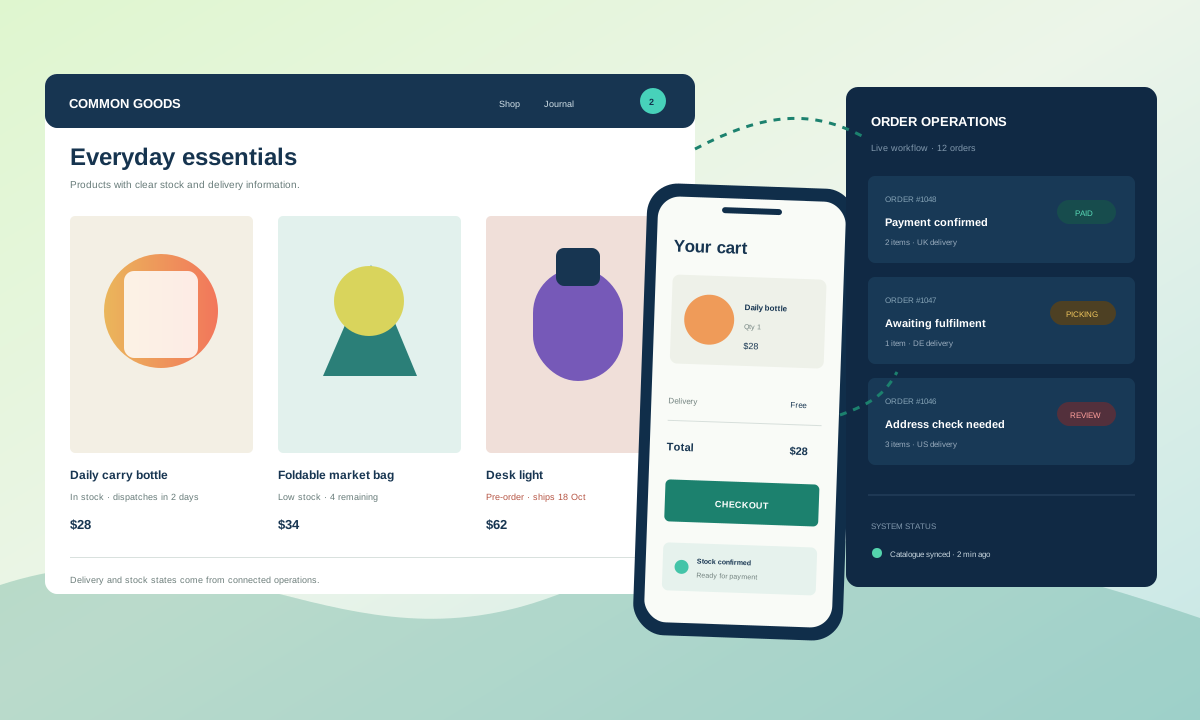
Inventory, tax, shipping, payments and customer service continue beyond the storefront. Custom middleware may still be required even when the visible store uses a managed theme.
Identify each system of record, sync direction, failure state and responsible owner.
Compare total operation rather than only build cost. Include subscription and application fees, theme work, data migration, payment costs, integration maintenance, updates and staff training. Identify who manages products, orders, returns and failed connections. A platform with a lower initial quote can become awkward if the daily workflow depends on manual exports, while a custom system can be excessive for a straightforward store.
Compare total ownership
Custom control adds responsibility for infrastructure, security, updates and incident response. Managed software reduces some operational work but introduces platform rules and recurring costs.
Practical checks
- Compare several years of realistic delivery and maintenance rather than only the initial build.
Test the hardest product and order before committing. Configure representative variants, stock, discounts, tax, delivery, payment and return states, then run them through administration and checkout. Prototype any uncertain integration. Record which system owns product and customer data and how it can be exported. The preferred option should support the real catalogue and team with a maintainable release path.
Related service